
By Shashwat Srivastava|
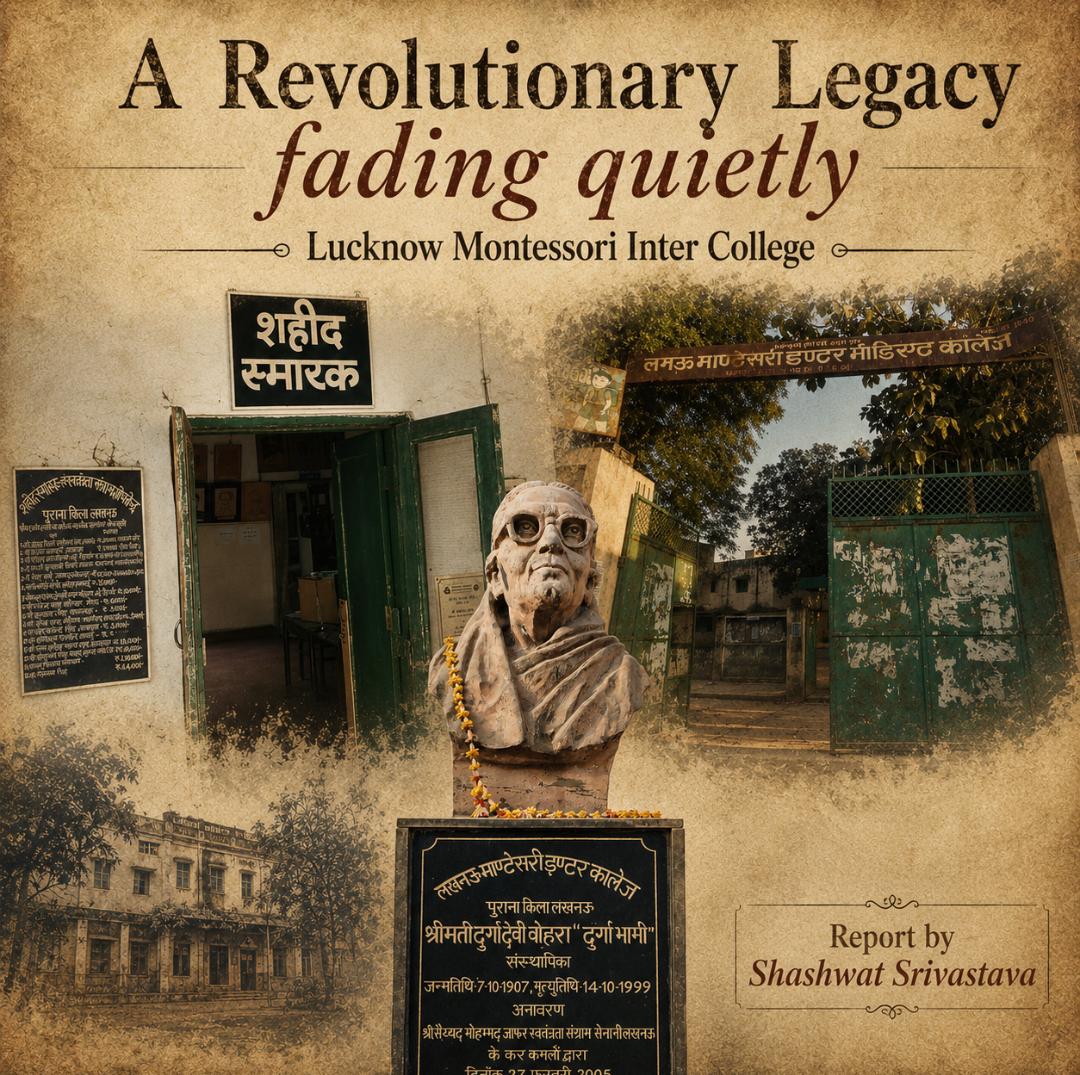
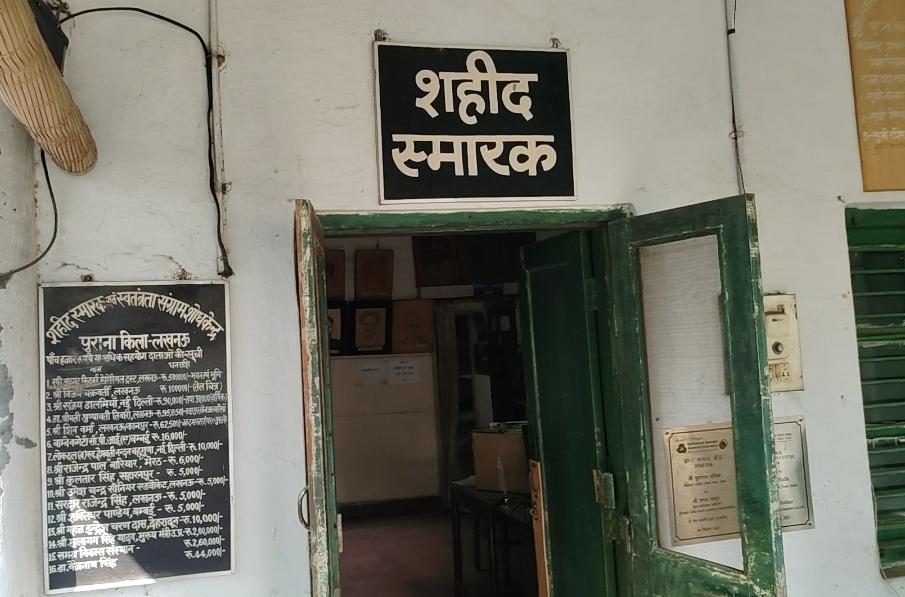
Lucknow: Inside the campus of Lucknow Montessori Inter College at Purana Qila stands a place that carries memories of India’s freedom struggle. It is not immediately visible to visitors, but behind the school buildings lies the Shaheed Smarak Swatantrata Sangram Shodh Kendra, a research centre that once drew historians, scholars and discussions, and today survives in a quieter, uncertain state.
The legacy of Durga Bhabhi
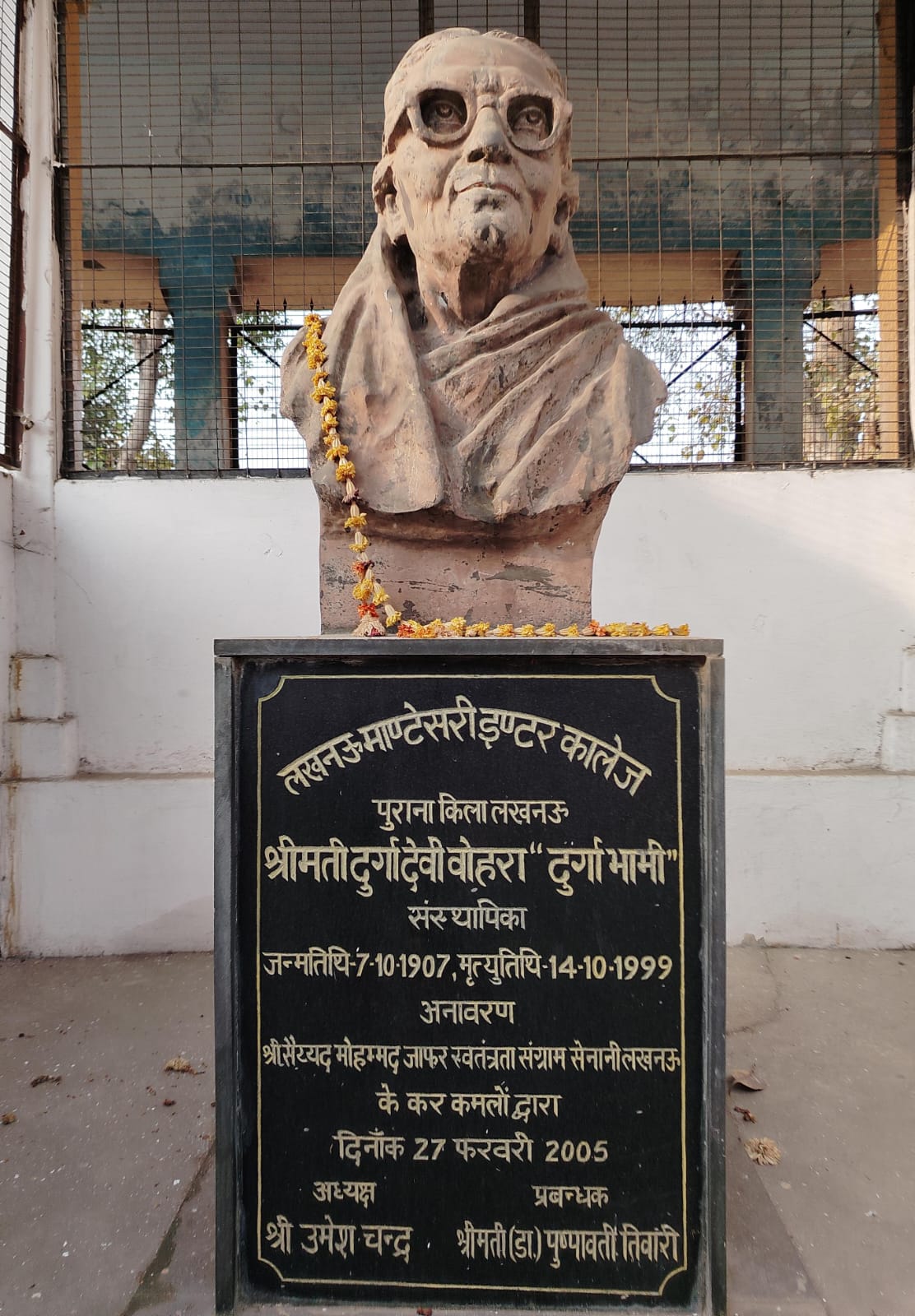
The story of this institution begins with Durga Bhabhi, a name closely linked with the revolutionary movement and associates of Bhagat Singh. She played a key role in helping revolutionaries during the freedom struggle and later dedicated her life to education.
After moving to Lucknow, she established the school with a vision of accessible learning. The institution was inaugurated by Jawaharlal Nehru, while Rafi Ahmed Kidwai was instrumental in shaping its organisational foundation. Durga Bhabhi continued her association with the institution for decades before her death in Ghaziabad.
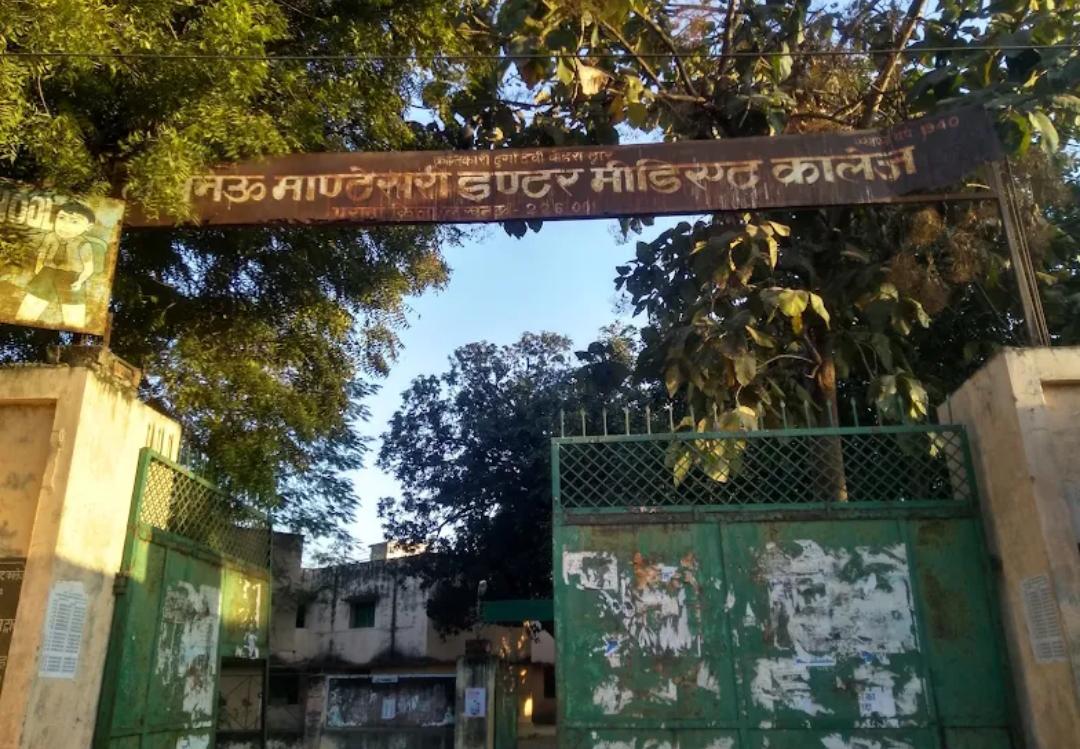
Today, the school continues to function with steady admissions and regular academic activity, maintaining its role as an educational space in the city for children that come from humble backgrounds.
A House that Became a Centre of History
Within the campus, Durga Bhabhi’s former residence was later converted into a research centre on the suggestion of Shiv Verma. Over time, it developed into a repository of rare material related to India’s freedom struggle.
The library holds handwritten documents, personal letters, manuscripts and records linked to several revolutionary movements, including Kakori, the Ghadar movement and the Indian National Army. Audio interviews of freedom fighters who had undergone Kala Pani imprisonment were also recorded here. Researchers recall that at one time, the centre hosted regular discussions and even provided accommodation to visiting scholars. Umesh Kumar, a research scholar associated with the centre between 2017 and 2022, said that regular discussions and weekly meetings used to take place at the centre, with researchers and visitors actively participating.
An archive that still exists, but Struggles to Function
Despite its historical importance, the research centre today is not as active as it once was. The school administration maintains that the facility is open to researchers with permission and that maintenance work, such as repairs to the roof and boundary walls, has been carried out. “We welcome anyone who wants to study. If people come, the library is available to them,” said Principal Prashant Mishra, adding that efforts have been made to improve the structure over time.
However, conversations with former members and researchers suggest a different picture on the ground. While the building remains, they say the system that once supported regular activity has weakened significantly. Several pointed out that access, though not officially closed, has become dependent on permissions and availability, making it difficult for regular academic use.
Others highlighted that the absence of a full-time caretaker has reduced both monitoring and upkeep of the material. “There is no regular staff or caretaker now. Earlier, access was easier because someone was always there to manage it. Now everything depends on permissions,” said Umesh Kumar. Former members also expressed concern over the condition of documents and lack of continuous maintenance.
According to them, while basic repairs to the structure have been carried out, there is no consistent system in place for preservation, cataloguing or daily care of rare material. Pankaj Chaturvedi, a former member associated with the trust. Ex- editor – National Book Trust, renound Journalist & Author said “The building has been repaired in parts, but the real issue is the documents inside. Without regular maintenance, there is always a risk of damage,”
Some also pointed to the impact of administrative disputes on access and engagement. Jai Prakash, who was earlier part of the management said “Because of ongoing issues, people who were earlier involved stopped going there. That has affected the functioning,”
Why activity has slowed down
Interviews with people associated with the institution point to multiple reasons behind the slowdown. The decline began gradually after key individuals who were actively managing the centre became inactive. Among them was P K Srivastava, a former head of the History Department at Lucknow University, who played a central role in building the research centre’s academic culture. He regularly guided students, Organised discussions and was closely involved in maintaining the library’s activities.
Pankaj Chaturvedi, a former member of the trust said “There was a time when seminars, discussions and book releases were happening regularly. After that, things started slowing down, The focus should be on protecting the material inside, not just the building,” Others point towards internal disputes and legal issues within the managing structure. “Because of ongoing conflicts and court matters, people stopped going there. There is hesitation now,” said Jai Prakash, who was earlier associated with the institution’s management.
At the same time, there are differing views on funding and responsibility. While some former members claim that financial resources were available through donations and publications, the current administration maintains that there is no consistent funding and that maintenance is managed with limited resources.
Documents at risk despite Partial upkeep
Although minor repair work has been undertaken at the site, the condition of the archival material continues to raise concerns. The research centre houses rare manuscripts, letters and historical documents, but in the absence of regular staff and systematic upkeep, these materials remain vulnerable. Unlike structural repairs, preservation of documents requires continuous monitoring, controlled handling and proper storage conditions, which appear to be lacking at present.
People associated with the centre say that while the building has been made secure to some extent, there is no consistent system in place to ensure the safety of the archives inside.
As a result, valuable records risk gradual wear and damage over time. Experts stress that without immediate attention to preservation practices, including regular maintenance and documentation, the historical value of the collection could be compromised in the long run.
Questions of structure and responsibility
The question of how the research centre is managed is still not very clear.
According to the current administration, both the school and the research centre work under the Rafi Ahmed Kidwai Montessori Memorial Trust, with one common system in place. However, some former members say that in reality, roles and responsibilities have not always been clearly defined. Over the years, changes in committees, internal disagreements and ongoing legal matters have affected how the centre functions. Because of this, there is no fixed system to ensure regular activity in the research centre.
While the school continues to run properly, the library does not seem to have a separate or dedicated management setup. This lack of clarity has made it difficult to maintain regular work and proper oversight. People associated with the institution feel that unless clear responsibility is assigned and a proper system is put in place, the research centre will continue to depend on individuals rather than run smoothly as an institution.
Avenues for revival
Despite the challenges, there is broad agreement that the research centre holds significant historical value and can still be revived with the right steps. Those associated with the institution say the immediate need is for a dedicated caretaker or staff, so that the library can remain open regularly and not depend on permissions each time.
There is also a need for a more structured access system, allowing students and researchers to use the archive more easily. “If access becomes regular, people will start coming again,” said Kranti Kumar Katiyar, General Secretary to Kranti Smriti Sanrkashan Samiti. Experts also highlight the importance of preservation and digitisation of rare documents, so that manuscripts, letters and records are not lost over time.
Increasing awareness and reconnecting with universities and researchers are seen as important steps to bring back academic activity. While some have suggested shifting the collection to a more active space, others maintain that it should remain within its original premises due to its association with Durga Bhabhi.
For now, the archive remains intact but underused, and its revival may depend on how quickly these basic systems are put back in place.